
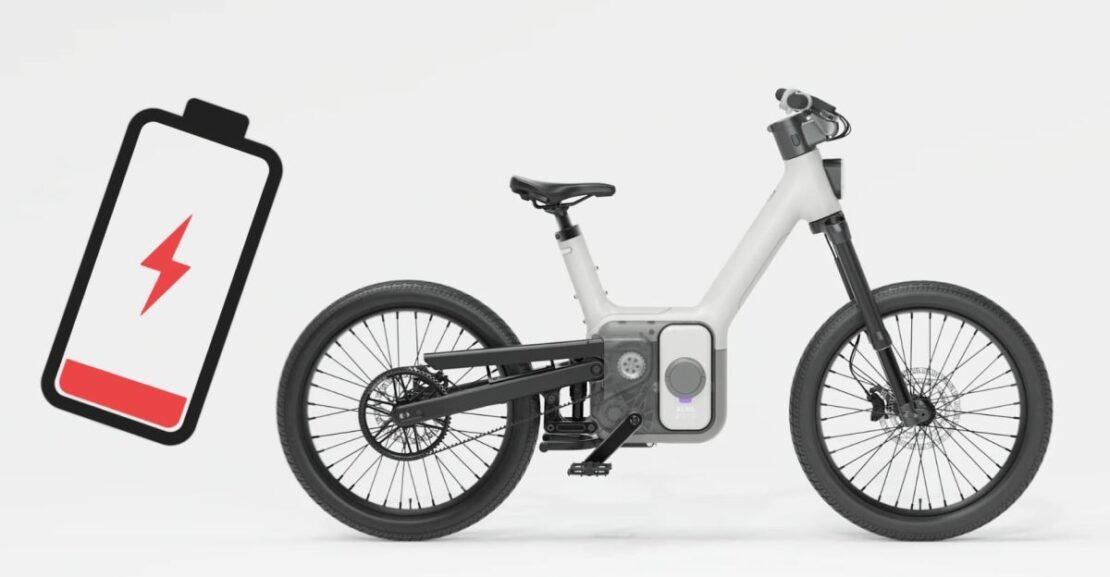
The ALSO TM-B is one of the most technologically unique new e-bikes to hit the market, distinguished entirely by the absence of a mechanical connection between the pedals and the rear wheel. Utilizing copper wires instead of a traditional chain or belt, the pedal-by-wire system relies on pedaling to generate electricity while the rear wheel is driven electrically. This setup enables features like software-simulated gearing and high-level boost modes, but it also creates unique challenges when the battery runs completely out of power.
Testing Progressive Power Loss and Low Battery Behavior
An early Launch Edition owner, Aaron Draczynski, deliberately ran the ALSO TM-B down toward empty to evaluate how the drive-by-wire system handles depleted battery states. Beginning an experiment at 31% charge, the owner observed that the bike progressively restricted maximum assist to conserve energy as the charge dropped. Power levels stepped down incrementally from Level 8 to Level 5 between 23% and 13% charge, continuing down to Level 1 as capacity neared depletion.
At 4% battery, conventional electric assistance stopped entirely. At this stage, the bike also began randomly shifting through its software-simulated gears without rider input, even though physical gears and derailleurs do not exist on the machine.
How Infinite Turtle Mode Works
Once the battery reached its final depleted state, an infinity symbol appeared on the display, initiating what the owner termed “Infinite Turtle Mode.” Instead of utilizing stored battery energy, the system attempts to pass rider pedaling energy directly through the electronic drivetrain to keep the rear wheel turning, functioning similarly to a crank-powered flashlight.
On flat ground, this mode allowed the rider to maintain a reasonable pace with resistance roughly comparable to a normal bicycle in fourth gear. However, the system revealed severe limitations on inclines. Facing even a slight hill transformed the ride into a grueling ordeal, feeling akin to being stuck in seventh or eighth gear. Furthermore, manual shifting was disabled in this mode, preventing the rider from electronically selecting an easier virtual gear for climbing.
Standby Drain and System Resets
Beyond low-battery riding dynamics, testing highlighted notable standby power consumption. When left unplugged in a garage, the TM-B dropped from 70% charge to 40% overnight, and down to 18% a day later. The owner suspected that poor cellular reception in the garage caused the bike to continuously search for a signal, aggressively draining the battery.
Eventually, the bike displayed a “Bike issue detected” message and refused to recognize its own installed battery or allow normal ejection for off-bike charging. Restoring functionality required using a physical reset button located underneath the frame.
Practical Takeaway
The real-world test demonstrates that the ALSO TM-B can keep a rider moving via human power alone on flat surfaces when the battery dies, but it cannot overcome steep hills efficiently due to fixed virtual gearing limitations and high pedaling resistance.
Source: Original report