
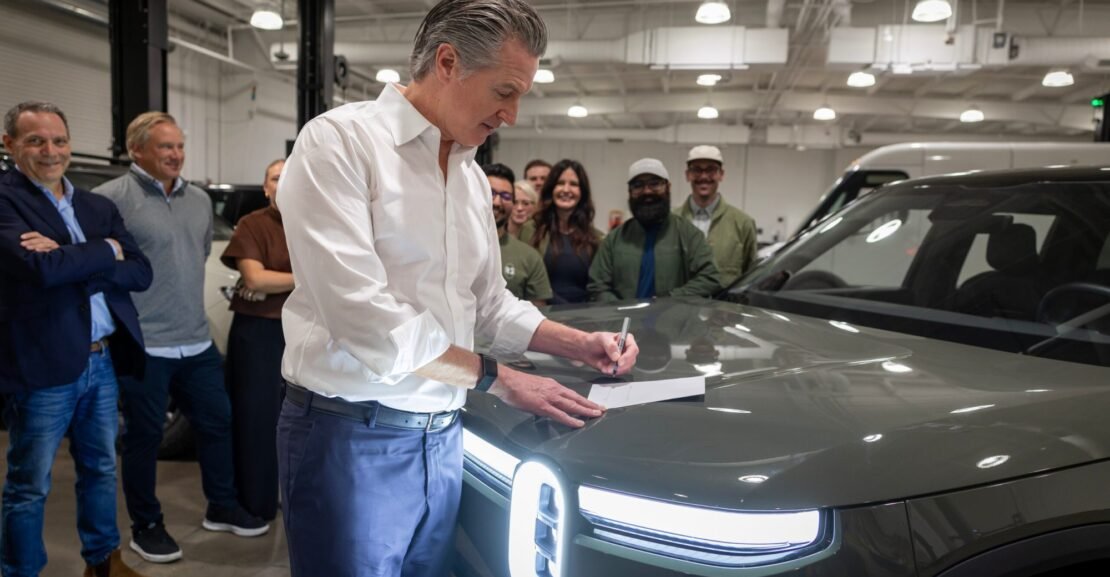
California Governor Gavin Newsom signed Senate Establishment legislation, Senate Bill 168, establishing a rebate program for electric vehicles within the state’s 2026-27 budget. Alongside this legislative action, California will spend $95.2 million to build more electric vehicle charging stations and hydrogen refueling sites across the state.
Rebate Programs and Sales Data
First-time California electric vehicle shoppers have been eligible for an up-to-$3,500 rebate on the purchase of a new vehicle since August, while residents purchasing a used vehicle can receive up to $1,750 back. Data released October 16 by the governor’s office indicates that nearly 12,000 Californians have utilized the MyFirstEV rebate program.
Sales figures from the California Energy Commission show more than 233,000 zero-emission vehicle sales recorded during the year, representing approximately 18% of passenger vehicle sales. Cumulatively, slightly under 2.8 million zero-emission vehicles have been sold in the state.
Ownership Demographics Across Counties
Data from a 2025 American Community Survey one-year estimate indicates that about 13.8% of households in California possess one or more electric vehicles, which includes all-electric vehicles and plug-in hybrids. Nationally, about 5.5% of U.S. households own an EV.
The nine counties with the highest proportion of EV-possessing households nationwide are all located in California, led by Santa Clara County at 24.1%. Additional leading counties include Marin, San Mateo, Alameda, Contra Costa, Orange, Napa, San Diego, and Los Angeles. Furthermore, the data highlights a possession gap between California homeowners, at 17.7%, and renters, at 8.9%.
Relevance for European Readers
Understanding regional policy interventions, infrastructure spending, and household adoption rates in major non-European automotive markets like California provides comparative context for global EV transition strategies, infrastructure deployment challenges, and government incentive programs.
Practical Takeaway: Regional infrastructure investments and targeted purchase rebates can sustain local zero-emission vehicle adoption rates despite shifts in federal funding and broader regulatory uncertainties.
Source: Original report