
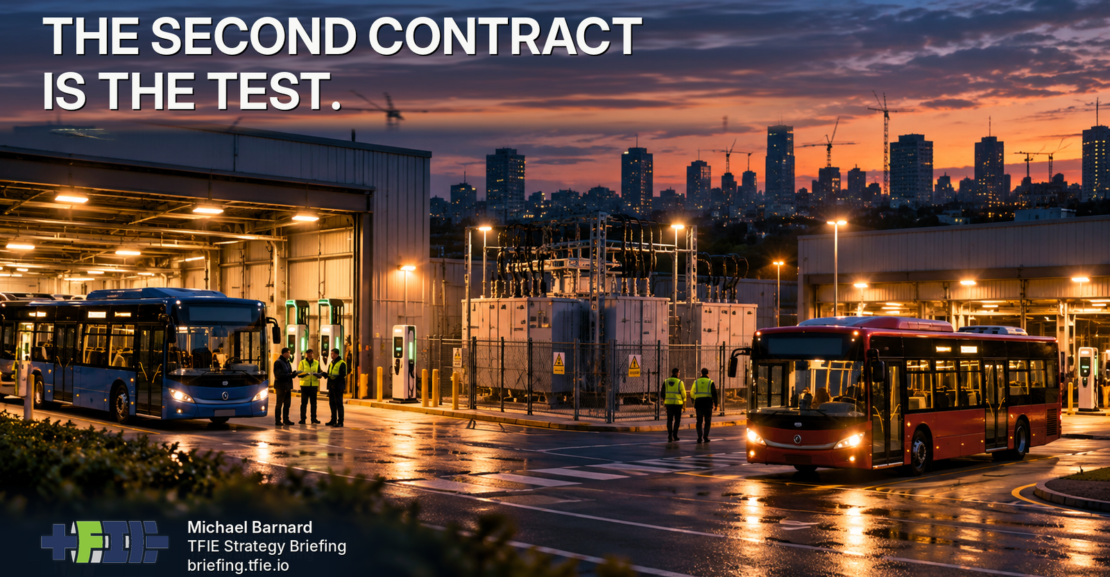
Greater Manchester is entering a new stage of bus franchising, highlighted by Go North West winning two Bee Network operating contracts covering 38 routes and approximately 60 buses, with service beginning in March 2027. Eighteen of those routes will operate from a new depot in Leigh. This transition underscores how operating companies can change while depots, charging infrastructure, and grid connections remain in place for decades.
Infrastructure Durability Versus Short Contracts
Electric-bus procurement adds a long-lived physical commitment to contracts that typically run for only five to seven years. While depot buildings, substations, and multi-megawatt electricity connections can remain useful through several successive contracts, these assets are strictly tied to particular sites. When an authority retenders electric-bus routes, a competing operator submitting a credible plan often lacks assured rights to use the existing depot and electricity infrastructure, potentially introducing years of work and substantial costs.
Public Depot Ownership Approaches
Different regional authorities are adopting distinct strategies to address these continuity hurdles. In March 2026, the South Yorkshire Mayoral Combined Authority announced the purchase of five major depots to add to the publicly owned Leger Way depot in Doncaster, with First Bus and Stagecoach leasing the premises back during the transition. Meanwhile, London has historically maintained a competitively operated bus network while many garages remain outside direct Transport for London ownership, relying instead on secure leases, access rights, and assignable contracts.
Managing Residual Asset Value
Remaining asset value sits at the core of the operational transition test. If an operator finances long-term charging infrastructure under a short-term contract, clear frameworks must dictate what happens to the investment if a different operator wins subsequent routes. Authorities must address depreciation, compensation, asset transfer, warranties, software access, and grid-connection permissions before contracts begin to maintain market contestability and service continuity.
Practical Takeaway
For transport authorities and fleet operators, successful electric bus transitions require upfront agreements on depot access, charging infrastructure transfer, and grid connection rights to prevent retendering bottlenecks.
Source: Original report