The 2026 Paris Motor Show promised a glimpse into the future of mobility. What it delivered was a fascinating mix of genuinely exciting electric cars, ambitious Chinese luxury brands, questionable design decisions and enough split headlights to last several lifetimes.
I walked through the show looking for innovation, beautiful engineering and cars that make you want to get behind the wheel. I found all three. Unfortunately, I also found an extraordinary number of SUVs that looked remarkably similar.
Here is my take on the cars that caught my attention, the concepts that impressed me, and the design trends that manufacturers desperately need to reconsider.
Chinese luxury cars are getting serious
One of the most striking things about this year’s show was the number of Chinese manufacturers targeting the premium and luxury segments.
The AITO M9 immediately made an impression with its imposing proportions, measuring approximately 5.3 metres long, and its ambitious luxury positioning. Inside, the emphasis was on premium materials, leather and technology. The AITO M7 and M6 continued the theme, offering different interpretations of the premium SUV formula.
But the real question is no longer whether Chinese manufacturers can build large, luxurious vehicles. They clearly can. The question is whether their products offer the design identity, quality and desirability needed to compete with established luxury brands.
Denza provided one of the most convincing answers.
Alfa Romeo: a concept worth getting excited about
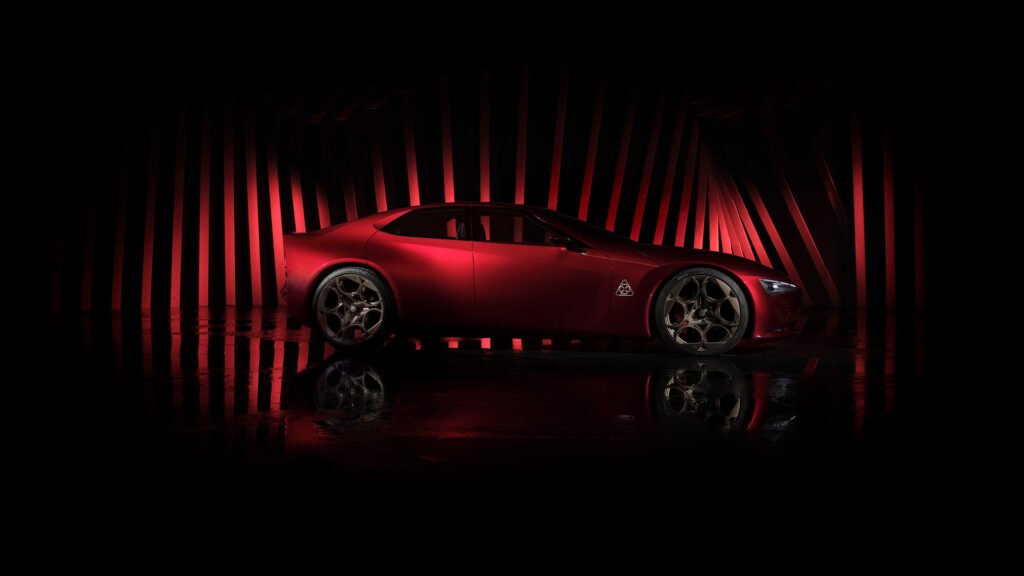
Alfa Romeo had one of my favourite cars at the show: the striking Alfa Romeo concept presented under the name CuoreRosso, meaning RedHeart.
Its dramatic proportions, distinctive red finish and beautiful wheels made it stand out immediately. This is the kind of concept that reminds us why automotive design matters. A car should make you stop, look twice and imagine what it would be like to own one.
The Alfa Romeo Junior Luna Rossa also attracted attention, although the Rosso concept was the highlight for me.
The show needed more moments like this: bold ideas that look as though someone designed them because they genuinely wanted to create something beautiful.
Denza Z9 GT: luxury without the traditional badge
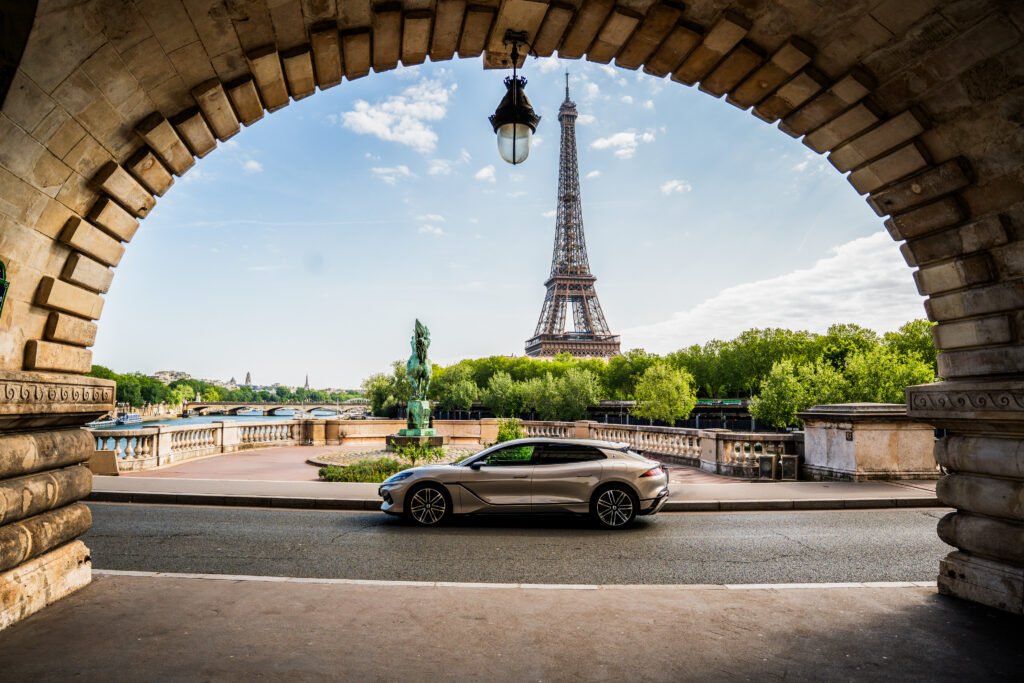
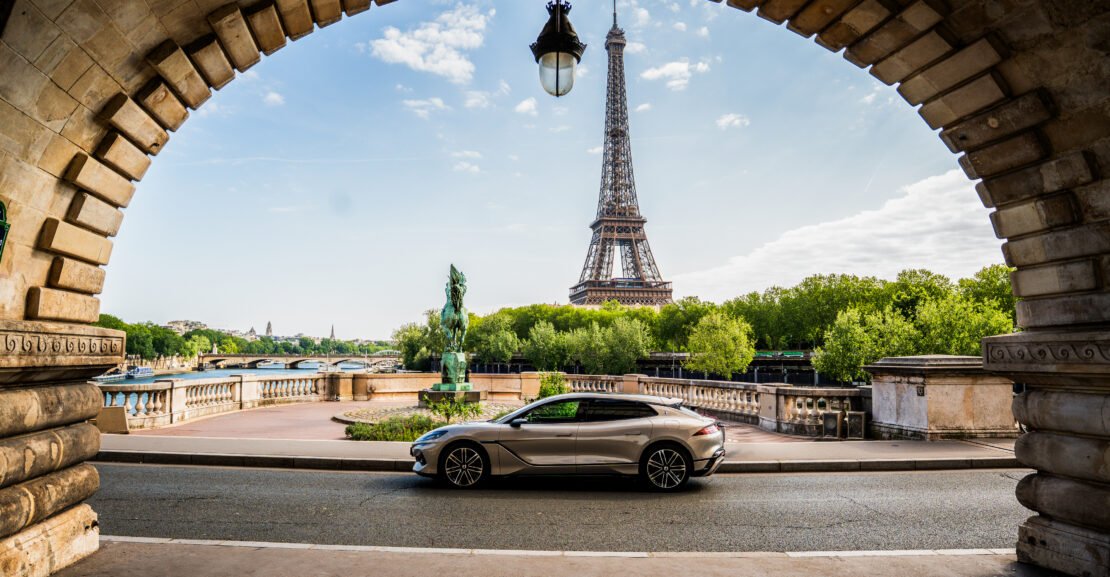
My favourite car at the entire show was the Denza Z9 GT.
The exterior has presence, but the interior is where this car really makes its case. Leather, carefully presented materials, responsive touchscreen technology and thoughtful details combine to create a genuinely premium atmosphere.
There is even a refrigerator integrated into the armrest, accessible from both sides. The doors open with a theatrical flourish, while the crystal-style controls add another touch of luxury. Rear passengers benefit from generous space, and the boot offers plenty of room for luggage.
It is an impressive demonstration of what BYD’s premium brand can deliver.
Does it mean nobody needs a Rolls-Royce anymore? That might be taking things a little too far. But the Z9 GT certainly raises an interesting question: how much of the traditional luxury-car premium is tied to the badge, and how much comes from the actual experience?
Denza also displayed the Z9, a striking coupé-style 2+2 that was presented alongside a Spider version. Its blue-green finish and elegant proportions offered a welcome alternative to the endless parade of SUVs.
Lucid Gravity: clever engineering in a very large package
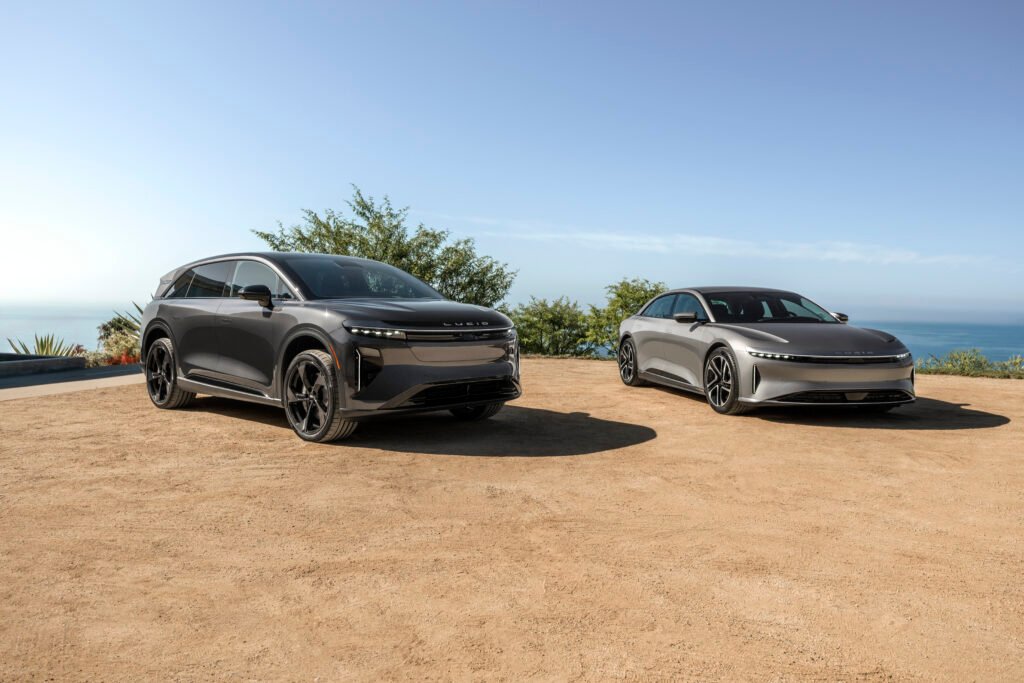
The Lucid Gravity was another highlight, particularly for its practical engineering.
This is a substantial vehicle, and European roads will not suddenly become wider to accommodate it. Nevertheless, the interior packaging demonstrates some genuinely clever thinking.
The third-row seats fold away with an impressively simple mechanism, and the boot configuration makes it easy to switch between passenger and cargo duties. Even with the additional seating, there is usable space for occupants, while the cabin feels airy and thoughtfully designed.
The powered screen movement is another entertaining touch. Swipe it down and it descends; swipe it up and it rises.
Will that mechanism still work perfectly after years of family use? Only time will tell.
Still, the Gravity demonstrates that electric vehicles can offer more than a large battery and a giant touchscreen. Good engineering can make a genuinely useful difference to everyday life.
Dacia Spring: affordable electric mobility still matters
Among all the enormous luxury vehicles, Dacia offered something refreshingly straightforward: the Spring.
It is a small, affordable electric car with a clear purpose. It does not need to compete with luxury SUVs, nor does it need an unnecessarily complicated design to justify its existence.
The new Spring also features an interesting approach to accessories, including 3D-printable elements. The dashboard looks reasonably well thought out, and the car remains focused on accessible electric mobility.
Dacia also displayed its hybrid range, including the Striker, Duster, Bigster and Sandero.
This is an important reminder that the electric transition is not only about expensive flagships. Affordable cars that meet real-world needs matter just as much.
Audi: please stop covering everything in glossy black plastic
Audi brought some serious machinery to Paris, including the RS e-tron GT performance and the RS5 Avant.
The RS e-tron GT remains an impressive electric performance car, while the RS5 Avant demonstrates that there is still room for desirable estate cars in a market increasingly dominated by SUVs.
I particularly appreciate manufacturers that continue to invest in sedans and estates rather than abandoning every traditional body style.
Unfortunately, the interiors were less convincing in places.
There was too much glossy black plastic, with surfaces that look impressive under exhibition lighting but can quickly become fingerprint magnets. Some details felt surprisingly ordinary for vehicles positioned at this level.
Audi also presented its new A2 electric direction. The original A2 remains a car I remember fondly, and I was particularly interested to see the name return.
I still believe manufacturers should stop treating electric propulsion as something that requires a separate identity in every model name. The electric version should be the normal car, with hybrid, petrol and diesel variants identified where relevant.
Electric mobility should become ordinary, not something that needs to announce itself constantly.
The great SUV and split-headlight epidemic
At some point during the show, I began to wonder whether automotive designers had all received the same instructions.
Make an SUV. Add a second set of headlights. Put a screen inside. Repeat.
Across numerous manufacturers, the same visual formula appeared again and again. Some designs integrated their split headlights successfully, but many others seemed to have divided the lighting simply because it was fashionable.
Not every car needs multiple lighting signatures, decorative LED strips and elaborate front-end graphics. Sometimes a pair of well-designed headlights is enough.
The same applies to the interiors. Almost every vehicle seemed to feature a large central screen, wireless charging and a collection of touch-sensitive controls.
Technology is useful when it improves the experience. It becomes less convincing when it exists primarily to fill space.
Mercedes-Benz was a particularly interesting example. The brand displayed its electric AMG GT, electric C-Class, GLA and GLC, among other models. Yet some of the interior details felt surprisingly disappointing, especially the glossy black surfaces and the tactile quality of certain controls.
The electric C-Class also adopted a much more rounded silhouette than the traditional three-box sedan.
Mercedes still knows how to create a luxurious cabin, as some of the more traditional models demonstrated. But premium branding alone cannot compensate for materials and controls that fail to feel premium.
Concept cars: inspiration or nostalgia?
Several manufacturers turned to their own histories for inspiration.
Renault presented multiple concepts and reinterpretations drawing on familiar names and historic models. Nostalgia can be powerful, and a well-executed retro design can create an immediate emotional connection.
But there is a limit.
If every new concept is a reinterpretation of an old car, where are the genuinely new ideas?
Citroën’s 2CV-inspired concept was one of the designs that left me particularly unconvinced. The original 2CV made sense in its historical context, when simplicity and affordability were essential. Recreating its visual language today is a very different proposition.
The same question applies to Fiat’s Multipla-inspired ideas. Reviving a controversial design for nostalgia’s sake does not automatically make it desirable.
Meanwhile, Peugeot’s RCZ Vision offered a reminder of a more sporting design language, even if the relationship between its different shapes and surfaces was not entirely convincing.
Concept cars should challenge us. They should show us something we have not seen before, not merely remind us of something we already know.
A few other cars worth mentioning
There were plenty of other interesting vehicles scattered throughout the exhibition.
The Hyundai Ioniq 3 caught my attention with its packaging, practical boot and spacious interior. It demonstrated how thoughtful use of space can make a compact electric car feel considerably larger than its exterior dimensions suggest.
Dacia’s approach to affordability contrasted nicely with the luxury ambitions of brands such as Denza and Lucid.
Lotus displayed the Emeya, whose dramatic aerodynamic design remains striking, although it was surprising to see a car that had already been around for several years presented alongside newer concepts.
The Škoda Peaq and other models demonstrated that split headlights can work when integrated carefully into the overall design. The ordinary Enyaq also looked more appealing to me than its coupé counterpart, particularly with the brown interior.
And then there was the Zeekr 001, which I previously had the opportunity to drive in Paris. It was a fitting vehicle to end the tour.
The real lesson from Paris
The 2026 Paris Motor Show was not short of technology, ambitious manufacturers or expensive vehicles. Chinese brands are increasingly confident in the premium segment, electric cars continue to diversify, and some manufacturers are doing genuinely impressive work with packaging and interior design.
But the exhibition also exposed a worrying tendency towards visual uniformity.
Too many SUVs look alike. Too many front ends rely on split headlights. Too many cabins replace tactile controls with screens and glossy surfaces. And too many concepts rely on nostalgia rather than genuinely new ideas.
The cars that stood out were the ones that offered something distinctive: the Alfa Romeo concept, the Denza Z9 GT, the Lucid Gravity and the surprisingly sensible Dacia Spring.
That is what I want to see more of. Not simply more technology, more screens or more complicated lighting signatures, but better ideas, better materials and cars with a clear identity.
Because the future of electric mobility should not mean that every car looks the same.
And if I see one more SUV with split headlights, I may have to start a support group.
Watch the full Paris Motor Show 2026 tour on ElectricHybridMarket for the complete walk-through, first impressions and plenty more automotive commentary.
If you have an electric or hybrid car to sell, visit ElectricHybridMarket.com and list your advert for free. No listing fees. No selling fees.