
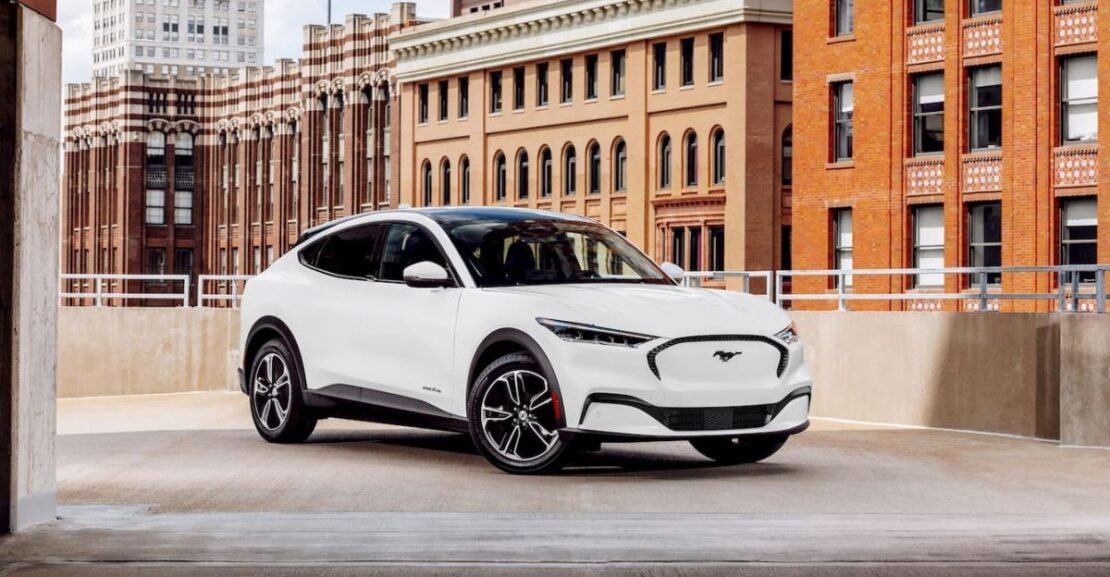
Ford has released real-world operational data revealing that its electric vehicle battery packs retain greater than 90% health on average after traveling 100,000 miles. The findings are based on telemetry collected from over 36,000 vehicles traversing two billion miles across the United States and Canada since the late-2020 market launch of the Mustang Mach-E.
Real-World Battery Longevity Data
According to the manufacturer, the Mustang Mach-E crossover SUV has maintained an average of 92% battery health over five years of operation. Across the broader EV lineup—including the F-150 Lightning pickup and E-Transit van—packs maintain more than 90% health on average at the 100,000-mile threshold. Data distribution shows that 95% of monitored vehicles fall within an 87% to 97% health spread.
Among 2021 model-year owners, over 2,000 vehicles have surpassed 100,000 miles on their original battery packs with an average health rating above 91%. Furthermore, more than 30 vehicles have crossed the 200,000-mile milestone, recording an average remaining health of 88%.
Battery Chemistries and Maintenance Practices
Ford utilizes different chemical compositions across its fleet. The 2021 Mustang Mach-E relies on an NCM (Nickel Cobalt Manganese) battery, while newer models incorporate lithium iron phosphate (LFP) chemistries, which support occasional charging to 100%. To preserve long-term capacity, the automaker advises owners to utilize Level 2 home charging for daily driving routines, reserve DC fast charging for extended trips, and avoid extreme temperature exposure through vehicle preconditioning and shaded parking.
Relevance for European Buyers
For European consumers evaluating zero-emission vehicles, large-scale longevity data provides verifiable benchmarks regarding long-term energy storage degradation. As European markets continue to expand EV adoption and infrastructure, empirical retention figures across high-mileage commercial and passenger fleets offer tangible insights into battery durability under everyday driving conditions.
Practical Takeaway
Real-world fleet data indicates that modern electric vehicle batteries retain strong capacity past 100,000 miles. Drivers can help maximize this lifespan by prioritizing home Level 2 charging, avoiding extreme thermal environments, and utilizing manufacturer-provided charge management tools.
Source: Original report