

Canada’s government has announced a proposed federal budget that includes more than $4 billion (CAD) in funding dedicated to electricity infrastructure and grid modernization. Within this broader financial allocation, the plan sets aside specific carveouts aimed at expanding the country’s network of EV chargers and improving accessibility for drivers.
Federal Funding Allocation for Charging Infrastructure
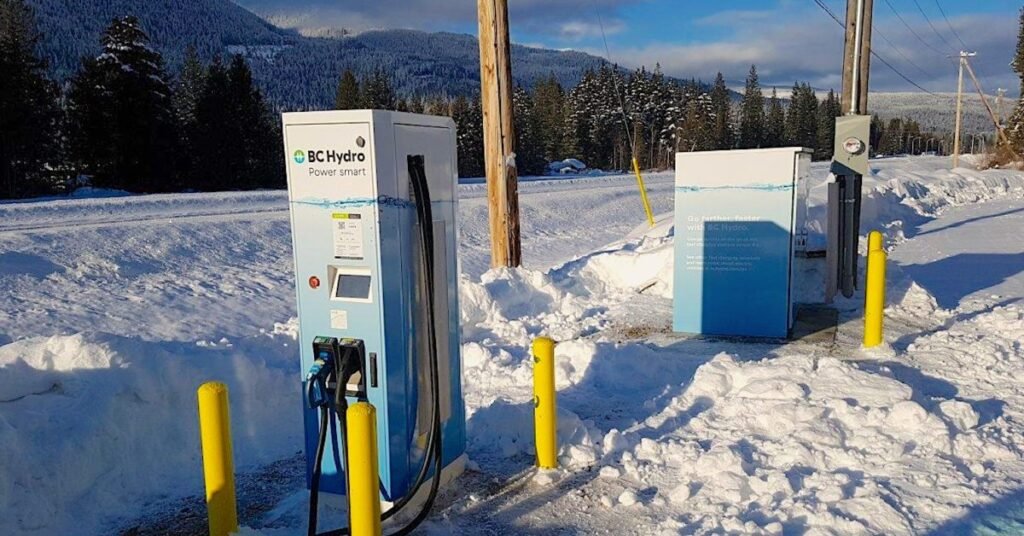
The proposed budget designates approximately $635 million specifically for EV charging infrastructure. Of that amount, $587 million is allocated to renew the Zero-Emission Vehicle Infrastructure Program (ZEVIP), which provides financial support for the development of new public charging stations across the country. ZEVIP is structured to cover up to 50% of eligible project expenses for standard projects, and up to 75% for projects led by indigenous developers, with individual project caps reaching up to $2 million.
Grid Modernization and Renewable Energy Integration
The remaining portion of the $4 billion investment is directed toward broader electricity infrastructure expansion over a 10-year period, scheduled to run from 2027 through 2036. Because a significant majority of Canada’s electrical generation already relies on renewable hydro and wind power, the initiative incorporates carveouts for the Smart Renewables and Electrification Pathways Program, alongside data and modeling efforts to support long-term grid planning. Additionally, the budget reserves $1.6 billion to modernize power systems located in northern and remote communities.
Significance for European Readers
For European observers and industry stakeholders, large-scale public funding initiatives highlighting dedicated grid modernization and public charging expansion offer a comparative benchmark for national transition policies. As European markets continue to address infrastructure bottlenecks—particularly for apartment dwellers, multi-unit residential buildings, and heavy-duty transport corridors—tracking how North American federal programs structure public-private cost-sharing models provides relevant context for regional policy development.
Practical Takeaway
The proposed Canadian budget outlines multi-year public investments aimed at scaling up public and commercial EV charging infrastructure over the next decade. Buyers and fleet operators monitoring regional infrastructure development should review upcoming ZEVIP project deployments to gauge local charging availability expansions.
Source: Original report