

Toyota’s Expanded Electric SUV Lineup
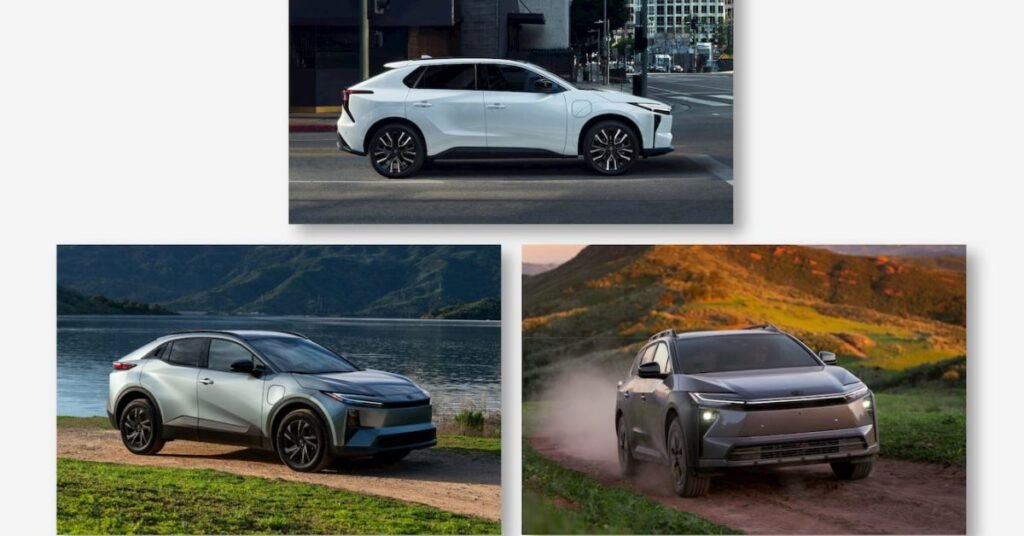
Toyota offers three distinct electric SUVs: the bZ, the C-HR, and the bZ Woodland. Following updates to the bZ line, Toyota’s electric vehicle sales have grown, positioning the brand among top-selling EV makers in the US market. Each model is engineered for different buyer needs, utilizing shared battery technology and native North American Charging Standard (NACS) ports for compatibility with Tesla Superchargers.
2027 Toyota bZ Specifications and Pricing
The 2027 Toyota bZ serves as the core everyday driver in the lineup, starting at $34,980 for the standard XLE FWD trim, excluding a $1,595 delivery fee. It is available with two battery options: a 57.7 kWh battery providing an EPA-estimated range of up to 236 miles, and a larger 74.7 kWh battery delivering up to 314 miles of range on the XLE FWD Plus model. Power outputs range from 165 hp to 221 hp for front-wheel-drive variants, while all-wheel-drive models deliver a combined 338 hp. Charging from 10% to 80% takes approximately 30 minutes.
2027 Toyota bZ Woodland and C-HR Options
For buyers seeking greater capability or distinct styling, Toyota offers the bZ Woodland and the C-HR. The 2027 bZ Woodland is 6 inches longer than the standard bZ, features standard all-wheel drive with an X-Mode control system, and delivers a combined 375 horsepower. It provides 8.3 inches of ground clearance, a 3,500 lbs towing capacity, and starts at $45,380. Its EPA-estimated range is 281 miles using the 74.7 kWh battery, dropping to 260 miles with optional all-terrain tires. Meanwhile, the 2027 Toyota C-HR is a smaller, coupe-like electric SUV starting at $37,080 with standard dual-motor all-wheel drive, offering up to 287 miles of EPA range on the SE grade.
Practical Takeaway
Toyota’s 2027 electric SUV lineup provides buyers with multiple choices ranging from the efficiency-focused bZ and sporty C-HR to the rugged, high-clearance bZ Woodland. All variants incorporate a built-in NACS port for direct Supercharger access and standard DC fast charging capabilities that reach 80% in about 30 minutes.
Source: Original report