
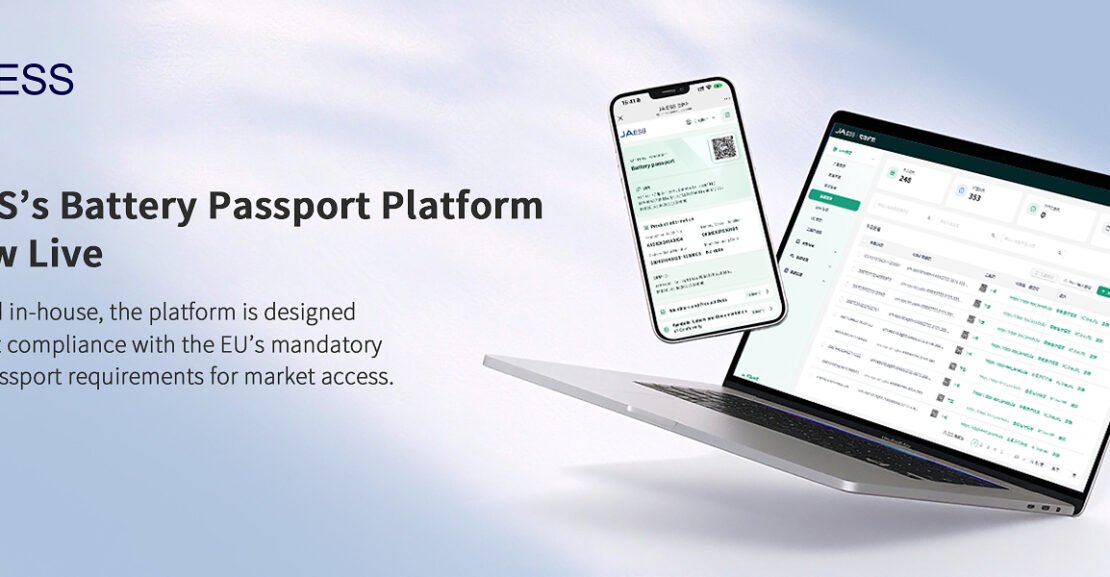
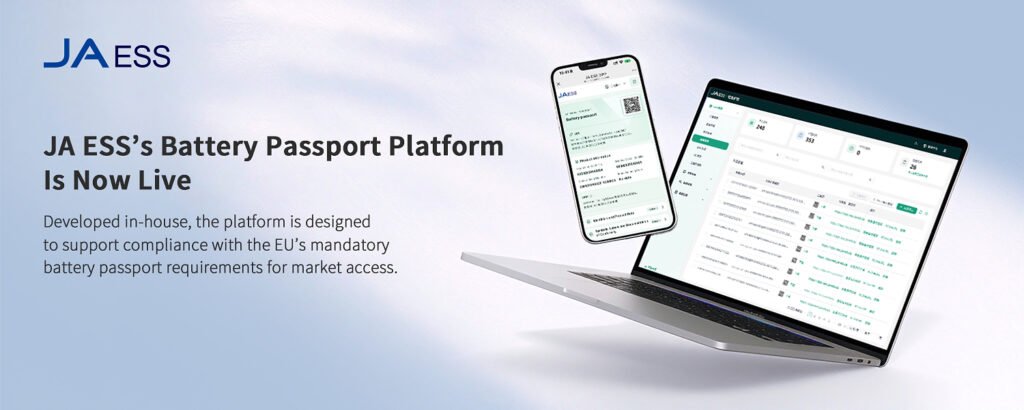
JA ESS has introduced an in-house battery passport data platform designed to support lifecycle information management and help companies prepare for upcoming EU regulations. The system is hosted within the company’s own cloud environment, placing direct responsibility for data policies, access permissions, and future platform updates entirely with the internal JA ESS team.
Understanding EU Battery Regulation Mandates
Under the EU Battery Regulation, battery passports become mandatory starting February 18, 2027. This requirement applies to batteries utilized in light means of transport, electric vehicles, and industrial batteries with a capacity exceeding 2 kWh that are placed on the market or put into service within the European Union.
Structure of the Digital Data Record
A battery passport functions as a digital data record linked directly to a single physical battery. Using a QR code and a unique identifier based on the ISO/IEC 15459 series, the record connects to the battery to enable data access throughout its entire operational lifecycle.
The recorded information encompasses product identity, material composition, carbon footprint, recycled content metrics, performance and durability parameters, current condition, supply chain due diligence, and end-of-life disposal details. This framework is engineered to support consistent information management from initial product identification through final disposal.
In-House Hosting and Data Control
Many manufacturers face challenges regarding data traceability, regulatory compliance, trade secret protection, and cross-border data transfer rules when using third-party systems. By developing the platform internally and managing it within a dedicated cloud environment, JA ESS retains control over data governance, access permissions, and alignment with evolving EU standards.
Practical Takeaway
With mandatory EU battery passports taking effect in February 2027 for electric vehicles and industrial batteries over 2 kWh, automotive and energy storage stakeholders must ensure their supply chain data is traceable, up-to-date, and fully compliant with upcoming regulatory standards.
Source: Original report