
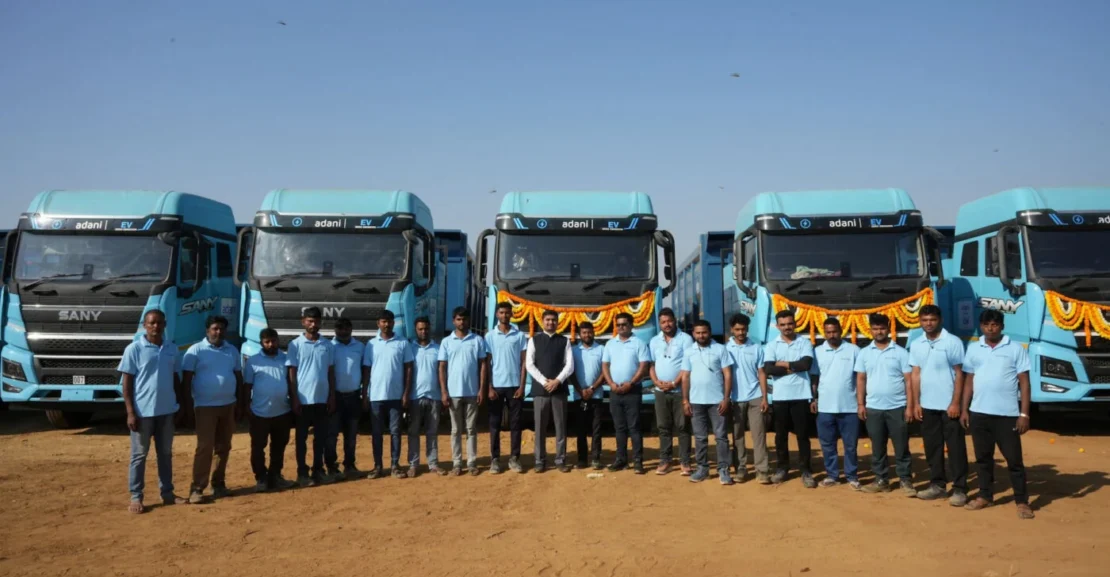
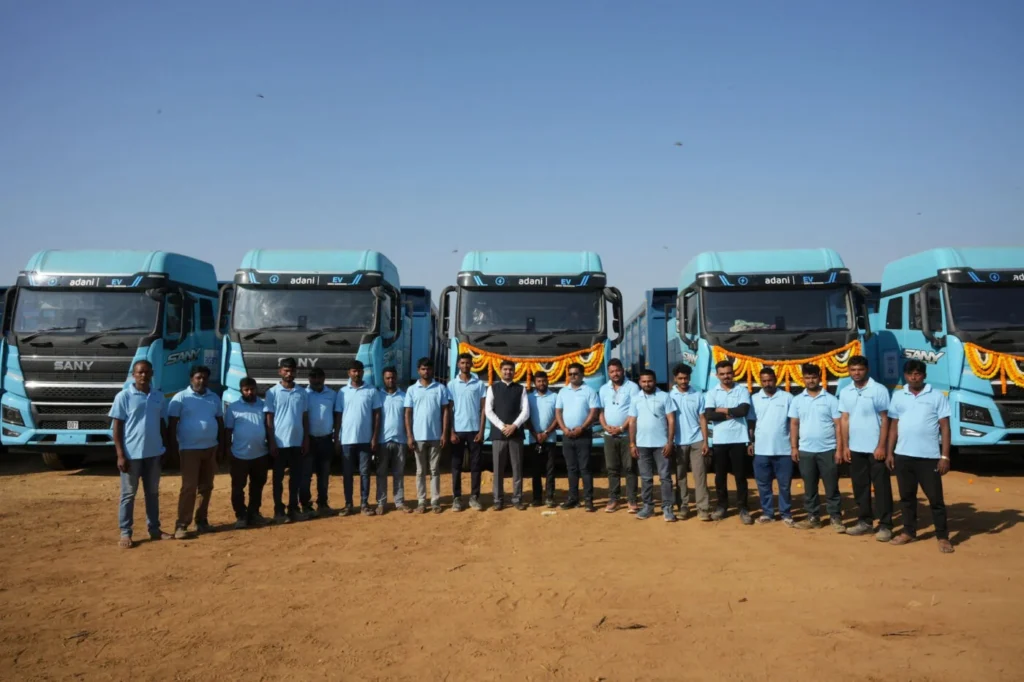
Adani Cement has flagged off its first fleet of heavy-duty electric trucks at the Sanghi Plant in Gujarat, marking the initial phase of a larger logistics electrification strategy. The company has announced plans to deploy 410 electric vehicles by March 2027 specifically for the movement of cement and clinker. This initial fleet deployment is projected to reduce carbon dioxide emissions by over 25,000 tonnes annually and displace approximately 11 million litres of diesel per year.
Logistics Expansion and Fleet Targets
The deployment at the Sanghi Plant serves as the starting point for a broader rollout across multiple routes in India. Adani Cement has established a long-term target to transition 10 percent of its logistics road volume to electric trucks by the year 2030. This broader roadmap entails scaling the operational fleet to over 2,000 electric vehicles. The company aims to insulate its transport cost base from diesel price volatility, noting that diesel prices climbed 60 percent over the past decade while lithium-ion battery pack costs dropped by roughly 70 percent and solar tariffs fell by 47 percent.
Emissions Reduction and Renewable Integration
Heavy-duty transport operations in the cement sector are traditionally carbon-intensive, with standard diesel trucks emitting approximately 0.7375 kg of carbon dioxide per kilometer. By integrating renewable energy sources to power the new electric fleet, Adani Cement aims to achieve zero freight emissions along designated supply chains. This initiative is structured to directly address Scope 3 emission reduction targets and support corporate net-zero goals as the company moves raw materials, limestone, clinker, and finished building products across India’s supply networks.
Practical Takeaway: Heavy-duty commercial fleet electrification in heavy industries is gaining commercial viability due to falling battery costs and tightening operational expenditure risks associated with fossil fuels. Fleet operators can monitor such large-scale regional deployments as indicators of how industrial freight is transitioning toward localized renewable charging ecosystems.
Source: Original report