
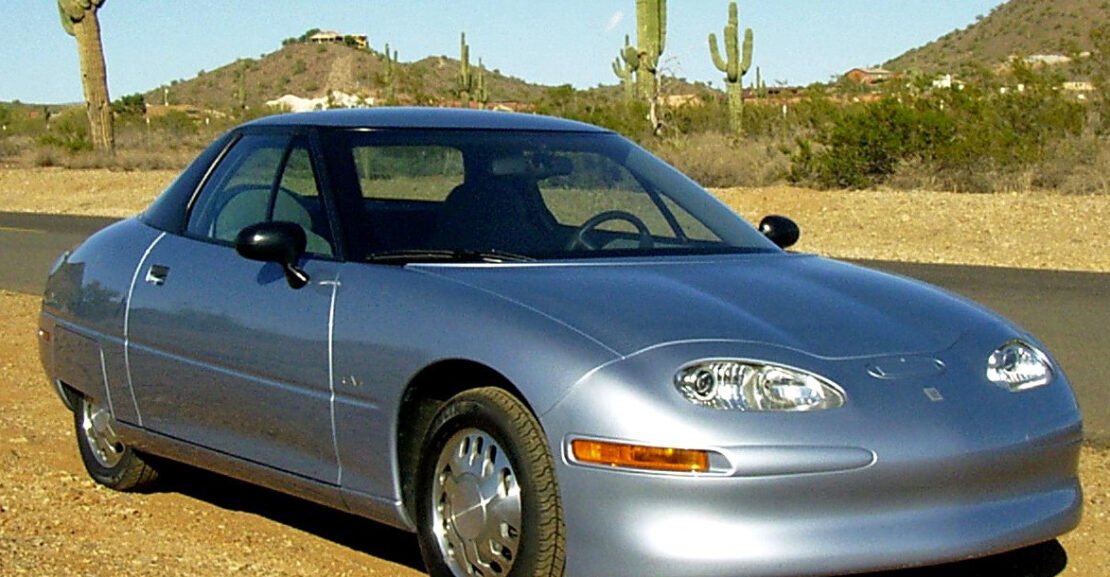
Thirty years after the first deliveries of the GM EV1, General Motors is celebrating one of the most important early chapters in modern electric vehicle history.
On November 2, 2026, the American automaker announced that its 1990 Impact electric concept would be displayed at EPCOT’s Test Track attraction in Florida through mid-December.
The exhibition commemorates three decades since the first EV1 deliveries and highlights the technologies that helped establish the foundations of today’s electric vehicles.
Before Modern EVs, There Was the GM Impact
The story of the GM EV1 began with the Impact, an experimental electric vehicle developed at a time when battery-powered passenger cars were far from mainstream.
Unlike many earlier electric conversions, the Impact was designed specifically around electric propulsion.
Its development helped General Motors explore the engineering challenges associated with creating a practical battery-electric vehicle.
The concept eventually influenced the production EV1, which began reaching customers in 1996.
That made the EV1 an important milestone in the development of modern electric transportation.
Technologies That Were Ahead of Their Time
The EV1 program explored several technologies that remain relevant to electric vehicles today.
General Motors highlights heat-pump climate control and advanced battery management among the innovations associated with the project.
Heat pumps are now widely used to improve cabin-heating efficiency in modern electric vehicles, particularly in colder weather.
Battery management systems are equally important. They monitor and control battery operation, helping maintain safety, performance and longevity.
Although modern systems are considerably more sophisticated, these technologies demonstrate how early electric vehicle engineering helped shape subsequent developments.
A Rare Opportunity to See the Impact
The Impact concept will remain on display at EPCOT’s Test Track attraction until approximately mid-December 2026.
For visitors interested in automotive history, the exhibition offers an opportunity to see an early purpose-built electric concept from a major manufacturer.
The display also illustrates the distance electric vehicle technology has travelled over three decades.
Modern EVs benefit from advances in lithium-ion battery technology, power electronics, charging infrastructure and software integration that were not available to early EV developers.
Why the GM EV1 Still Matters
The EV1 was not the beginning of electric motoring, which dates back much further.
However, it represented a significant attempt by a major global automaker to develop a modern electric passenger vehicle.
Its engineering helped demonstrate both the potential and limitations of the technology available during the 1990s.
Thirty years later, electric vehicles have become an established part of the global automotive market.
The Impact exhibition is therefore more than an automotive anniversary. It is a reminder that today’s electric vehicles emerged from decades of experimentation, engineering and technological progress.
One wonders how much more advanced the EV industry would have been if GM didn’t crush all of the EV1…
Source: General Motors, 2 November 2026