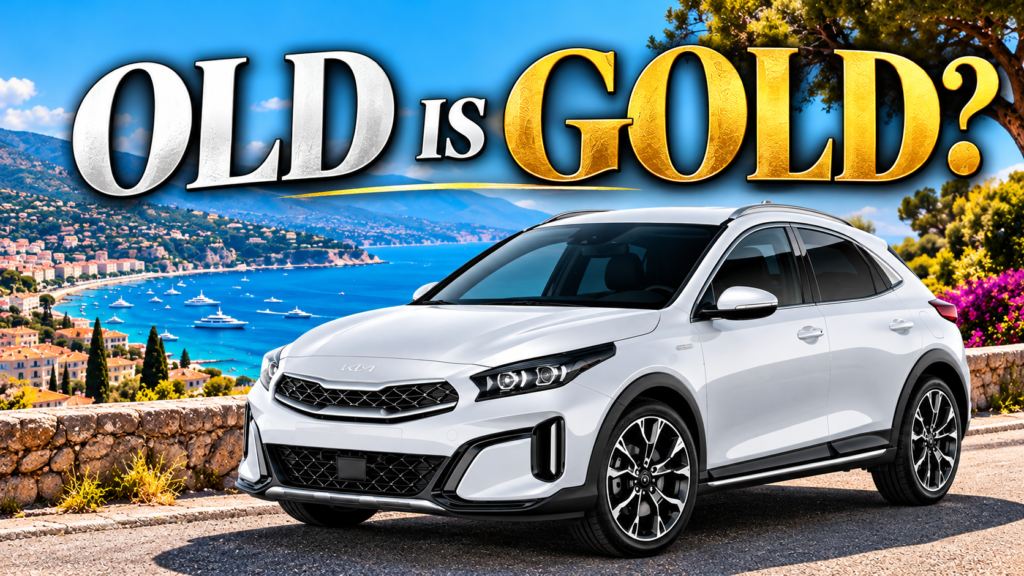
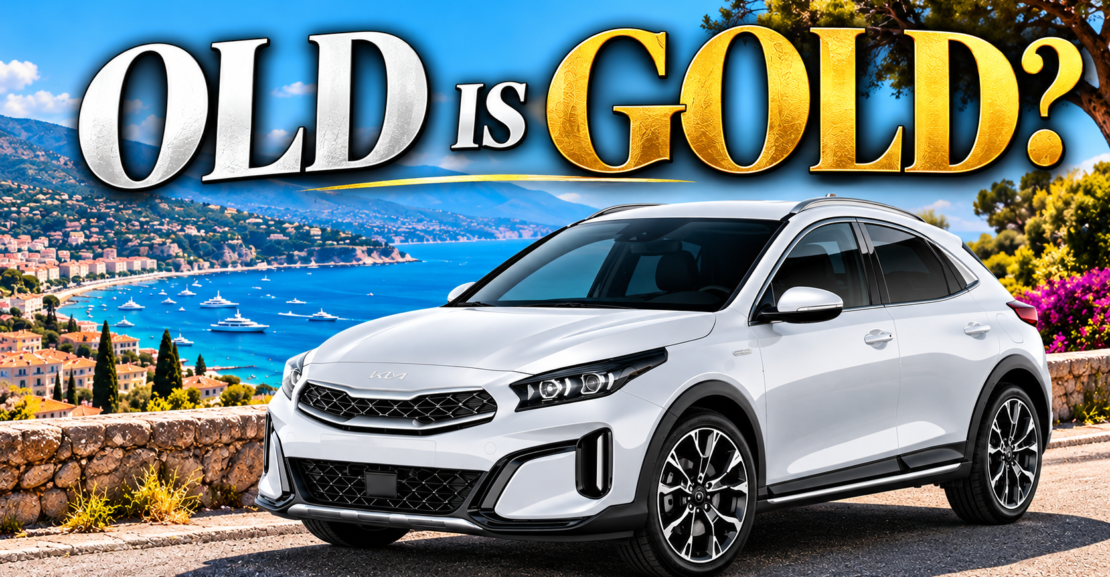
Why spend more on a brand-new hybrid when a used 2024 Kia XCeed Plug-in Hybrid offers elegant design, up to around 50 km of electric driving and a genuinely practical daily-driving experience?
Is it better to buy an older hybrid rather than a new one? In the case of the 2024 Kia XCeed Plug-in Hybrid, my answer is simple: yes, absolutely.
The idea behind this review is straightforward. You don’t necessarily need the latest electric car, the biggest battery or the newest technology to enjoy efficient, comfortable and practical motoring. Sometimes, a car from just a couple of years ago makes a lot more sense.
And the XCeed has another advantage: it looks good. Really good.
Kia’s golden age of design?
Let’s get one thing out of the way. Yes, it’s a Kia. But this XCeed comes from what I like to call Kia’s golden age of design, which began around 2012 with the second-generation Ceed.
The 2024 XCeed is a particularly good example of what happens when designers understand restraint.
There are no split headlights, no daytime running lights stretching in every possible direction and no complicated styling tricks trying to convince you that the car is slimmer than it really is. Its proportions make sense, its lines are coherent, and its overall appearance is elegant without trying too hard.
Compare that with some of today’s electric cars, where the styling sometimes seems designed to distract you from the actual shape of the vehicle.
The XCeed doesn’t need those tricks. It is a handsome, discreet and well-proportioned crossover that should age gracefully.
For me, that matters. Buying a car is an emotional decision as well as a financial one. If you’re going to keep a vehicle for several years, you should actually like looking at it.
A plug-in hybrid with the right-sized battery
The XCeed Plug-in Hybrid combines a petrol engine with an electric motor and a battery of approximately 10 kWh.
Depending on your driving conditions and driving style, you can expect around 50 km of electric range in real-world use.
That might not sound impressive next to a modern electric vehicle offering several hundred kilometres of range. But that’s the wrong comparison.
Think about the average daily commute. If your journey to work and back is around 40–45 km, the XCeed could cover much or all of it using electricity alone, provided you start with a charged battery and conditions are favourable.
For longer journeys, the petrol engine takes over. You don’t have to plan your entire trip around charging stops, and you retain the flexibility of a conventional combustion-engine car.
This is precisely where a plug-in hybrid can make sense: electric driving during the week, petrol-powered flexibility when you need to travel further.
Why bigger batteries aren’t always better
There’s a tendency in the EV world to assume that a bigger battery automatically makes a better car. I’m not convinced.
A larger battery adds weight and cost. Depending on the vehicle’s platform, accommodating it can also compromise interior space or require changes to the wheelbase and proportions.
The XCeed’s relatively modest battery helps keep its weight around 1.6 tonnes. That’s a reasonable figure for a practical plug-in hybrid, and less weight is generally beneficial for efficiency and everyday driving.
Kia quotes a combined driving range of approximately 630 km for this version, although actual range will vary with driving style, temperature, speed and battery charge.
The point isn’t that every driver needs a plug-in hybrid. It’s that the right-sized battery can be more useful than the biggest battery.
Are hybrids really the worst of both worlds?
Some people argue that hybrids combine the disadvantages of electric and combustion-engine cars: two powertrains, more complexity and potentially higher maintenance costs.
There is some truth to the fact that a plug-in hybrid is mechanically more complex than a pure electric vehicle. But the comparison shouldn’t stop there.
What if your household would otherwise need two cars — one electric vehicle for commuting and a separate combustion-engine car for longer trips?
For some drivers, one plug-in hybrid can cover both roles. That doesn’t automatically make it the cheapest solution for everyone, but it demonstrates why the argument that hybrids are always the worst of both worlds is too simplistic.
The XCeed offers a useful compromise for drivers who can charge at home but still want the freedom to travel without depending entirely on public charging infrastructure.
Practicality: more than just a pretty exterior
The XCeed is a crossover, so it needs to work as an everyday family car, not simply look good in a parking space.
The boot is practical, with useful hooks on either side, a 12-volt socket and space for the charging cables. As with any plug-in hybrid, the battery and associated hardware affect the packaging, but the available luggage area remains useful for everyday shopping and normal trips.
Move to the rear seats and there’s a good amount of space for passengers. Even at 1.72 m tall, I found the knee room and headroom generous.
Rear passengers also get air vents, a USB-C charging connection, a folding centre armrest with cupholders and sizeable door pockets capable of holding large bottles.
The ISOFIX mounting points make it easier to install compatible child seats.
There are a few small details that could be better. The rear armrest’s cupholder design isn’t my favourite, but that’s hardly a deal-breaker.
Overall, the XCeed feels like a car designed to accommodate real people and their everyday needs.
An interior that gets the important things right
Inside, Kia has resisted the temptation to put absolutely everything behind a touchscreen.
The central display is large enough for the job, and I don’t see much reason to demand an even bigger screen. More importantly, the climate controls have physical buttons.
That means you can adjust the air conditioning without hunting through menus or taking your eyes off the road for longer than necessary.
There’s also a useful feature that lets you operate the climate control for the driver alone. When you’re travelling by yourself, why spend energy conditioning an empty passenger seat?
Connectivity includes Apple CarPlay and Android Auto, although both are wired in this configuration. There’s a USB-A port for that connection, a USB-C charging port and a 12-volt socket. A wireless phone charger is also available — even if I’m not particularly enthusiastic about wireless charging.
Storage is generous, with a sizeable centre console compartment, two cupholders, a useful glovebox and additional small storage areas.
The steering wheel adjusts for reach and height, the driving position is relatively high, and visibility is good. Heated seats are available on appropriately equipped versions, although they’re not exactly a priority during a sunny day in the south of France.
One small curiosity is the placement of the wiper controls, which I found counterintuitive for a European-market car.
These are minor observations, though. The overall impression is of a cabin that prioritises usability rather than technology for technology’s sake.
How does the Kia XCeed drive?
The XCeed isn’t pretending to be a sports car, and that is probably a good thing.
At low speeds, it is quiet and comfortable, even over cobblestones. In normal driving, the powertrain is perfectly adequate for commuting, urban traffic and everyday journeys.
Press the accelerator harder and the naturally aspirated petrol engine joins in. In Auto mode, the car manages the transition between electric and petrol power, while Sport mode gives the car a noticeably different character.
The performance figures might not look particularly exciting on paper, but the XCeed feels sufficiently responsive for normal use. Overtaking is manageable, and there is useful combined torque when you need to accelerate more decisively.
It isn’t going to set your pulse racing, but it doesn’t need to. I could genuinely see myself using this car as a daily driver.
Regenerative braking also helps recover energy when slowing down. It isn’t a full one-pedal-driving experience, but the system works well and contributes to a relaxed driving style.
And thankfully, there are no artificial engine sounds trying to convince you that you’re driving something more dramatic than you are. What you hear is the actual powertrain.
Interior quality: a pleasant surprise
This is where the XCeed impressed me more than I expected.
The materials you touch feel good, with soft-touch surfaces in the areas that matter. During my drive, I didn’t notice annoying rattles or squeaks, and the cabin felt solidly assembled.
Compare that with some much newer and considerably more expensive cars, including certain German models, and the Kia holds up surprisingly well.
It’s a reminder that the quality of a car isn’t determined solely by its badge, its price or the size of its infotainment screen.
Sometimes a slightly older vehicle simply gets the fundamentals right.
Why buy used instead of new?
Here’s the main argument behind this review.
A 2024 car is no longer brand-new in 2026. But that doesn’t mean it has suddenly become obsolete.
The XCeed still offers useful electric range for daily journeys, a petrol engine for longer trips, practical passenger space, a comfortable cabin and styling that doesn’t look desperate to follow the latest trend.
Buying used can also mean avoiding a substantial part of the original vehicle’s depreciation. The actual saving depends on mileage, condition, equipment, local market prices and the car’s service history, so buyers should compare individual examples rather than assume every used car is a bargain.
For a plug-in hybrid, there are a few additional checks worth making before buying:
- Battery condition: confirm that the high-voltage battery and charging system operate correctly.
- Charging: test the charging connection and make sure the car charges as expected.
- Service history: look for evidence of regular maintenance and any outstanding recalls or repairs.
- Real-world suitability: consider whether you can charge at home or at work, because regular charging is central to getting the benefits of a plug-in hybrid.
- Price comparison: compare the used car’s price with equivalent new and nearly new vehicles, taking warranty coverage and equipment into account.
A well-maintained used plug-in hybrid can be a very sensible purchase. The important thing is to buy the right example, not simply the cheapest one.
Final verdict: should you buy a used Kia XCeed PHEV?
Yes — absolutely, provided it suits your needs and you find a good example at the right price.
The 2024 Kia XCeed Plug-in Hybrid isn’t the newest car on the market, and it doesn’t have an enormous battery or futuristic styling. But it doesn’t need any of those things.
It is attractive, practical, comfortable and sufficiently refined for everyday driving. Its electric range can cover many daily commutes, while the petrol engine makes longer journeys straightforward.
Most importantly, it demonstrates that a good car doesn’t suddenly become a bad car just because a newer model exists.
If you want a sensible daily driver and don’t need the latest technology, buying a used XCeed PHEV could be a better decision than spending more on a new hybrid.
And there’s one final reason I like it: it’s a beautiful car.
Sometimes, that’s enough to make you look forward to getting behind the wheel.
Watch the full review on the ElectricHybridMarket YouTube channel, and if you have an electric or hybrid vehicle to sell, visit ElectricHybridMarket.com. Listings are free, with no listing fees and no sales commission.
ElectricHybridMarket is an independent EV and hybrid marketplace and automotive media platform.