
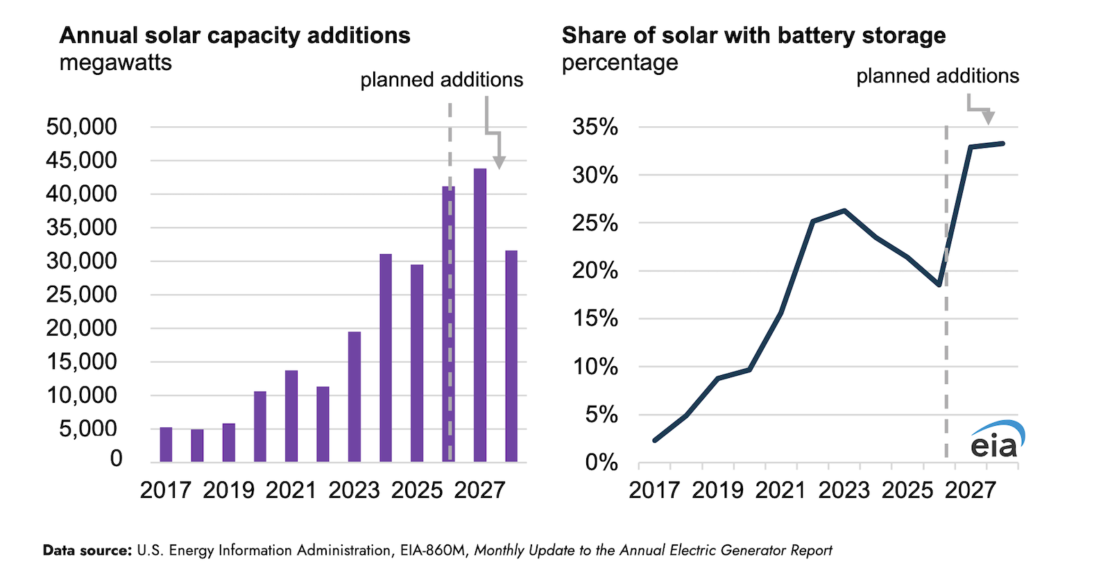
Utility-scale solar developers are increasingly integrating solar and battery storage systems across new photovoltaic installations. According to data reported to the U.S. Energy Information Administration, over 16% of new utility-scale solar capacity added by September 2026 featured operable battery storage, marking a substantial increase from just 2% in 2017.
Deployment Projections and Future Plans
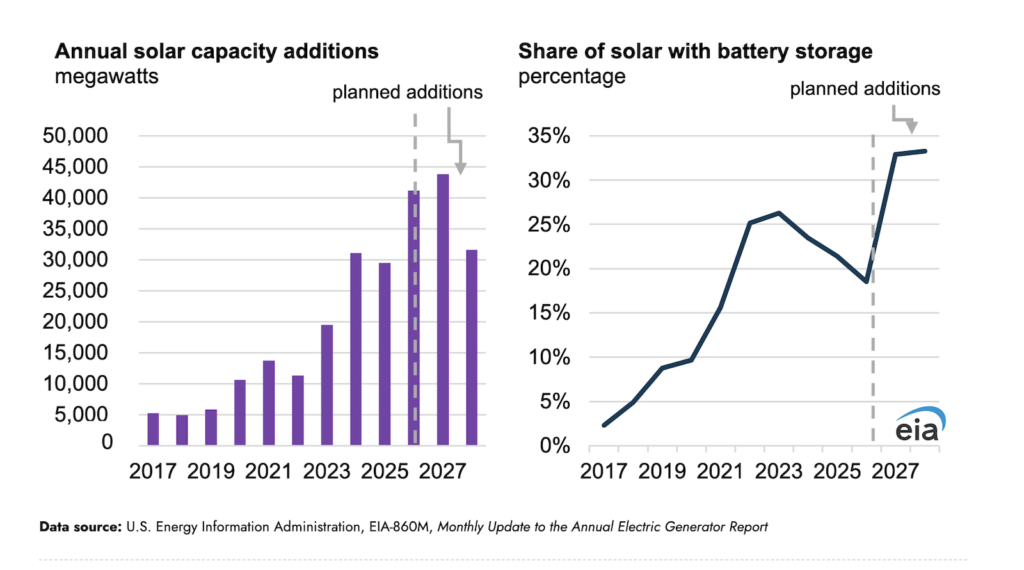
Operator reports for solar additions scheduled to come online in the final three months of the year indicate that the annual share utilizing solar and battery storage could climb to 19%. Longer-term projections submitted for 2027 and 2028 show this portion continuing to rise, surpassing 30% in planned installations.
Operational Dynamics and Regional Concentration
Co-locating storage allows operators to direct solar electricity output either to the grid or to the battery depending on prevailing wholesale prices, which typically fluctuate based on solar generation levels. Regional data shows that Southwest states, including California, Arizona, New Mexico, and Nevada, exhibit co-location shares more than double the national average, supported by higher overall solar capacity shares.
Practical Takeaway
As generation facilities increasingly combine solar generation with energy storage to manage output value dynamically, tracking these infrastructure shifts provides essential context for understanding broader renewable energy integration and grid management trends.
Source: Original report